I spent 9 years working in equine e-commerce at SmartPak, and if there’s one thing I learned, it’s this: equine businesses face SEO challenges that are completely different from other industries.
Your customers aren’t concentrated in cities. They’re scattered across rural areas, farms, and ranches spanning hundreds of miles. They might drive an hour to see their favorite trainer or ship a horse halfway across the country to work with a specific vet. And when they search for services, they’re using very specific, low-volume keywords that traditional SEO strategies completely miss.
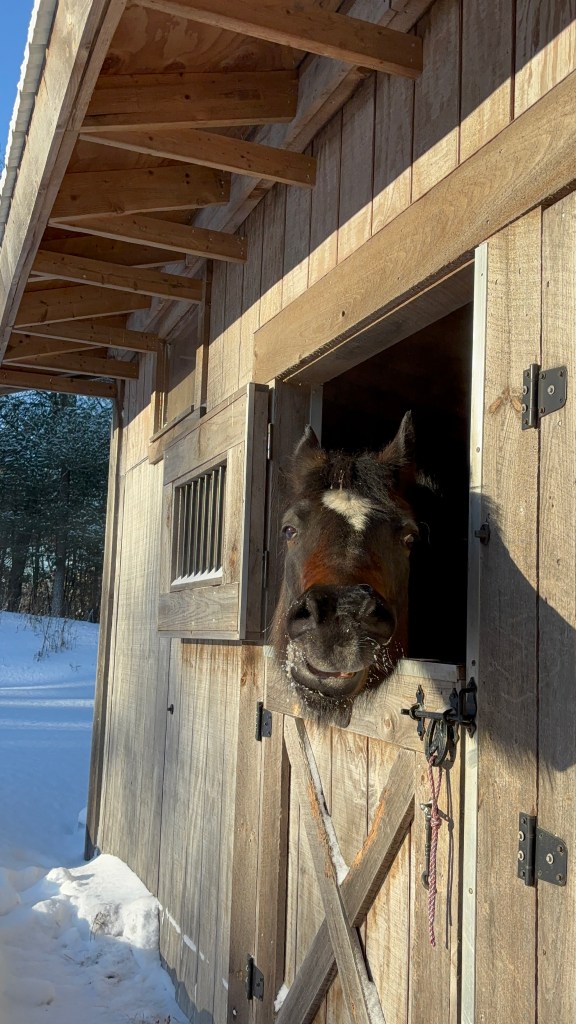
I’ve seen too many talented equine professionals—trainers, farriers, boarding facilities, vets, tack shops—struggle to get found online because they’re following advice designed for urban businesses or national brands. That advice doesn’t work for you, since as already know as a horse person- you’re a special breed. Just like my Morgan friend, Forest. He says- Listen up! We have some custom tips just for equine business owners.
Let me show what does work.
Why Standard SEO Advice Fails for Equine Businesses
Most SEO consultants will tell you to “target high-volume keywords” and “build local citations.” Great advice if you’re a dentist in downtown Boston. Useless if you’re a dressage trainer in rural Vermont.
Here’s why equine SEO is different:
Your service area is huge. While a restaurant might serve a 5-mile radius, equine professionals often draw clients from 30, 50, even 100+ miles away. Standard local SEO tactics don’t account for this.
Search volumes are low. There aren’t thousands of people per month searching “equine veterinarian near me” in your area. You might be fighting for 50 searches per month—but those 50 searches are incredibly valuable.
Your customers are highly specific. Horse people aren’t looking for generic services. They’re searching “three-day eventing trainer,” “equine chiropractor for performance horses,” or “boarding facility with outdoor arenas and trails.” Generic keywords won’t cut it.
Trust matters more than anything. Horse owners aren’t clicking on the first result—they’re researching, asking for recommendations in Facebook groups, Reddit subs or COTH, and looking for proof of expertise. Your online presence needs to build credibility, not just rankings.
Start With a Service Area Strategy (Not Just Local SEO)
The first mistake I see equine businesses make is thinking “local SEO” means optimizing for your town. If you’re in a town of 3,000 people and you serve clients within a 60-mile radius, optimizing just for your town name is leaving massive opportunity on the table.
Here’s what to do instead:
Map out everywhere your actual clients come from. Look at your client list and note their towns, counties, or regions. These are your real service areas.
Create location pages for your service areas. If you’re a mobile equine vet serving three counties, create dedicated pages for each county or major town. Title them something like “Equine Veterinary Services in [County Name]” and include:
- Services you provide in that area
- Response time or service radius
- Any area-specific information (facilities you work with, local shows you attend)
- Testimonials from clients in that region
This gives you a chance to rank for “[service] in [area]” searches across your entire service area—not just your home base.
On your Google Business Profile, set your service area to include all the areas you actually serve. Don’t just list your physical location if you travel to clients.
Use Niche Keywords (Not “Equine Trainer”)
“Equine trainer” is too broad. Even “dressage trainer” might not be specific enough. Horse people search the way they talk—and they’re incredibly specific about what they need.
Examples of how horse owners actually search:
- “OTTB retraining [location]”
- “Western pleasure trainer near [area]”
- “Barefoot farrier [region]”
- “Boarding barn with indoor arena [county]”
- “Equine dentist [state]”
How to find your niche keywords:
Listen to how your clients describe what they need when they contact you. What exact phrases do they use? What problems are they trying to solve?
Check Facebook groups in your area. What are people asking for? How do they phrase their requests?
Use Google’s autocomplete. Start typing your service and location and see what Google suggests. Those suggestions are real searches people are making.
Don’t worry if the search volume is low. If you’re the only result for “three-day eventing trainer in [your area],” that’s all you need.
Create Content That Builds Trust and Authority
Here’s what separates horse businesses that succeed online from those that don’t: the ones that succeed create content that proves they know their stuff.
Horse owners are skeptical. They’ve seen too many “trainers” who don’t know a half-halt from a hand gallop. Before they call you, they’re going to Google you, check your social media, and read everything they can find about you.
Content that works for equine businesses:
Success stories and case studies. “How We Helped This OTTB Become a Successful Dressage Competitor” is infinitely more valuable than “Our Dressage Training Services.” Show real horses, real problems, real results.
Educational blog posts. Write about common questions your clients ask. “How Often Should a Performance Horse See a Chiropractor?” or “What to Look for in a Boarding Facility for Your Eventor.” These posts rank for informational searches and position you as an expert.
Video content. Horse people want to see you work. Post videos of training sessions, before-and-after clips, facility tours, or educational tips. Embed these on your website—Google loves video content, and clients love seeing proof of your skills.
Answers to common objections. If people hesitate to work with you because of price, distance, or availability, address it on your website. “I’m located in [town], but I regularly work with clients throughout [region]. Here’s how we make it work…”
Optimize for “Proof of Expertise” Signals
Google’s E-E-A-T (Experience, Expertise, Authoritativeness, Trustworthiness) guidelines matter especially for equine businesses. You need to show Google—and potential clients—that you’re legitimate.
Here’s how:
List your credentials prominently. USDF Gold Medalist? AAEP member? Certified farrier? Put it on your homepage, your about page, and your Google Business Profile.
Show competition results or client successes. If your students are winning, show it. If horses you’ve worked on are performing well, share it. Results matter in the horse world.
Get reviews on Google. Every happy client should be asked for a review. Make it easy—send them a direct link. Reviews build trust and improve your rankings.
Get listed on industry directories. USEF, USDF, AAEP, or breed-specific organizations. These backlinks tell Google you’re a real professional in the equine industry. Even if you have to pay a fee, it’s worth it.
Mention where you’ve worked, studied, or trained. “Trained under [well-known professional]” or “Former assistant trainer at [respected facility]” builds credibility.
Don’t Ignore the Equine Facebook Effect
I know this is supposed to be about SEO, but let’s be real: in the horse world, Facebook groups drive a ton of referrals. And here’s the thing—you can use that to boost your SEO.
When people ask for recommendations in local horse groups, make sure you have a website they can link to. When someone tags your business or shares a post about you, that social signal helps.
Also: Respond to those recommendation requests yourself when appropriate. “I’d love to help—here’s more about our program: [link to your website].” You’re not just getting a potential client; you’re getting a backlink and traffic that tells Google your site is relevant.
Make Your Website Work for Rural Internet (Yes, Really)
A lot of horse farms have terrible internet. If your website takes 30 seconds to load because it’s packed with huge images and videos that autoplay, you’re losing clients.
Optimize for speed:
- Compress images before uploading
- Don’t autoplay video
- Use a fast hosting provider
- Test your site on mobile (lots of barn managers are browsing on their phones between stalls)
I’ve literally had clients tell me they didn’t contact a trainer because the website wouldn’t load on their phone at the barn. Don’t let slow site speed cost you clients.
Measure What Matters (Not Just Rankings)
Here’s the truth about equine SEO: you’re never going to rank #1 for “horse trainer” nationally. That’s not the goal.
What you should track:
- Are you ranking for your specific niche + location keywords?
- Are you getting calls, emails, or contact form submissions?
- Are the people contacting you qualified (not random spam)?
- Are you showing up when people Google your business name + equine service?
If you’re getting 2-3 qualified leads per month from your website, that’s a success. In the equine industry, those leads are high-value. One new training client or boarding client can be worth thousands of dollars per year.
The Bottom Line
SEO for equine businesses isn’t about dominating national search results or ranking for generic keywords. It’s about making sure the right horse owner—the one who needs exactly what you offer and is willing to drive 45 minutes to work with you—can find you when they search.
It’s about building a website that proves you know horses, shows your expertise, and makes it easy for people to contact you.
And it’s about understanding that your customers are scattered across rural areas, search in very specific ways, and make decisions based on trust and reputation—not whoever ranks first for “horse trainer.”
I’ve seen equine businesses transform their client pipeline by getting these fundamentals right. No gimmicks, no black-hat tricks, just solid strategy tailored to how the equine industry actually works.
Want help building an SEO strategy that actually works for your equine business?Contact me for a consultation. After 10 years in the equine industry, I know what works—and what’s a waste of your time.
 Cathleen Voss Consulting
Leave a comment